


Word Search Meow - Cat Puzzle
5.0112.00 Reviews
App Specs
- Version
- 1.2.173
- Updated On
- License
- Free
- Downloads
- 10,000+
- Developer
- Yum Yum Labs
- Categories
- Word
- Platform
- Android
Screenshots
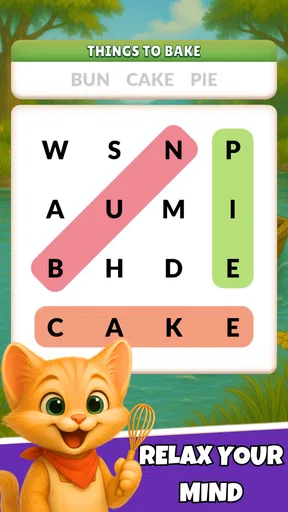
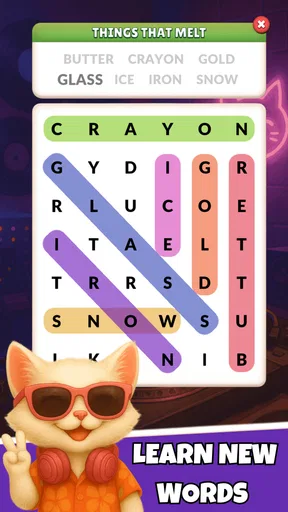

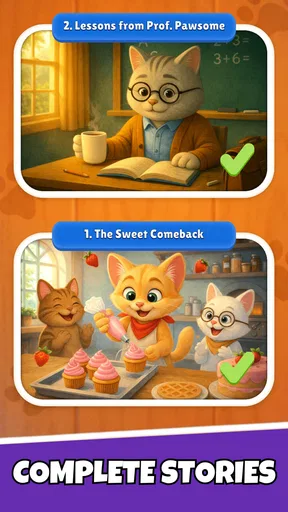

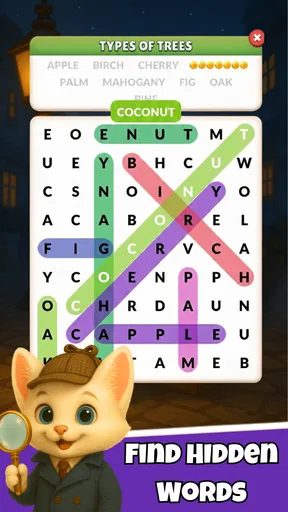
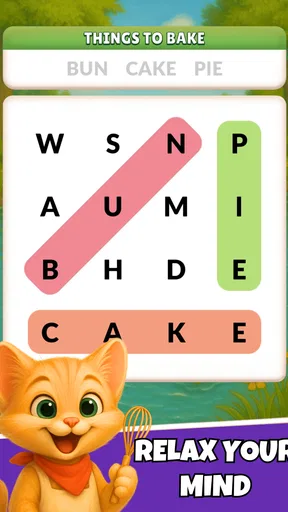
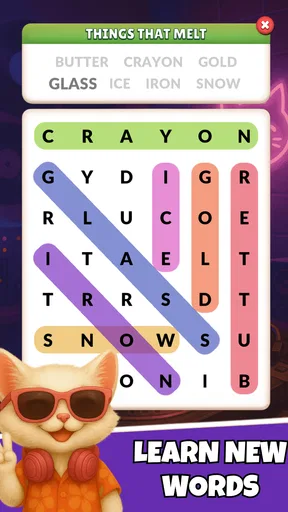
 Analysis by AppCompare
I found Word Search Meow - Cat Puzzle easy to understand within moments: it is a word-search game built around a gentle cat-story atmosphere rather than pressure, competition, or complicated rules. I can open it, settle into a puzzle, and focus on spotting words without first learning a large collection of systems. That simplicity is the main reason I would recommend it to someone who wants a quiet brain game for short breaks.
It comes from Yum Yum Labs and sits in the word-game category. The game is free to start, with optional purchases ranging from $0.99 to $9.99 per item. Its Everyone age rating also makes the presentation approachable for a broad audience, although adults looking for a calm way to keep their attention active are likely to appreciate its tone most.
My overall impression is positive, but it is important to understand what kind of experience this is. This is not a high-speed competitive word challenge, a vocabulary course, or a large strategy game disguised as a puzzle. Its appeal comes from the combination of familiar word searching and cozy cat-themed storytelling. The best reason to try it is the low mental friction: you can begin playing without turning the session into a project.
How Word Search Meow feels in everyday use
I begin with a simple action: open a puzzle and scan the letter grid for a word, without needing to plan a strategy first. This section looks at why that low-friction start fits everyday breaks, then turns to how the game’s pace shapes the experience once I settle in.
A gentle start that suits short sessions
The first thing I noticed is how naturally the game fits into spare moments. If I have a few minutes while waiting for an appointment or winding down before bed, a word-search puzzle gives me something to do without demanding the commitment of a longer game. I do not need to remember a complicated plot, manage several resources, or prepare a strategy before starting.
That makes the cat-story framing useful rather than decorative. The cozy setting changes the mood of a familiar puzzle format. Instead of feeling like I am completing a worksheet, I get the sense of moving through a small, comforting sequence of activities. Players who enjoy animal characters and softer presentation will probably connect with this faster than people who want an intense challenge.
The game is also a sensible choice for players who prefer visual word puzzles to timed quizzes. Searching through a letter grid lets me work at my own pace. I can scan horizontally, vertically, or diagonally, then pause to reset my eyes when the letters start blending together. That pause-friendly rhythm is one of its strongest qualities.
Worth Reading Before You Choose

Flipboard Shows What News Apps Must Do Beyond the Feed

Switching to Android Auto Means Rethinking Your Driving Routine

Google Calendar Makes a Crowded Week Easier to Manage

Ludo King Makes the Most of the Minutes Between Plans

Baby Panda World Brings Quick Play to Modern Phones, but Its Game Library Feels Busy

ESPN’s Live Game View Makes Following Close Games Easier
What the speed feels like during play
For this kind of game, perceived speed is less about rapid animation and more about how quickly I can move from opening the app to solving a puzzle. Word Search Meow has a straightforward concept, so it does not create much mental overhead. I can concentrate on the grid almost immediately instead of spending the opening minutes configuring a character or navigating a crowded menu.
That matters on an older supported phone as well as on a newer device. The minimum operating-system requirement is Android 8.0, which places the game within reach of many devices that are no longer current. I would still keep reasonable expectations: an older phone may show more hesitation when several apps are already open, but the basic word-search format is naturally less demanding than a visually intensive action game.
In practical terms, I would treat it as a game for steady concentration rather than instant reaction. If you are looking for rapid feedback, leaderboards, or a constant stream of effects, the relaxed design may feel slow. If you want your phone to give you a calm puzzle without making you rush, that same quality becomes a benefit.
When longer play changes the experience
A short session is where the concept feels most comfortable. During heavier use, the main challenge is likely to come from the player’s eyes and attention rather than from the game’s basic idea. Word-search grids can become tiring when I stare at similar letters for too long, especially after several puzzles in a row. I find it better to stop after a natural break than to keep searching once the grid has lost its shape.
One useful habit is to change the way I scan. Rather than repeatedly sweeping across the entire board, I look for the first or last letter of a target word, then check likely directions. This reduces random searching and makes the puzzle feel more deliberate. It is a small technique, but it helps prevent the common frustration of seeing the answer only after looking at the same area too many times.
Another practical approach is to use the game as a transition activity. I might play one puzzle after finishing work, before reading, or during a quiet morning coffee. That keeps the experience refreshing. Used this way, the cat stories and word grids complement each other. Used as a long uninterrupted marathon, the simplicity may start to feel repetitive for players who need constant novelty.
Reliability and recovery in real situations
A casual puzzle earns trust when it lets me return to it without making the process feel fragile. The most important recovery question for a game like this is what happens when I am interrupted. A phone call, a message, or switching to another app can break concentration, so I prefer to approach each puzzle with the expectation that real life may interrupt me.
My advice is simple: finish a natural step before leaving whenever possible. If I am halfway through a difficult grid, I avoid treating the session as something that must be completed immediately. That mindset makes the game more comfortable, because I am not turning a relaxing activity into a test of endurance. It also helps when playing on a device that aggressively closes background apps.
The game’s modest scope works in its favor from a reliability perspective. There are fewer moving parts than in a large multiplayer title or a game with a persistent competitive world. I would not choose it for advanced online interaction or demanding real-time performance, but that is not what it is trying to provide. Its value is in offering a contained puzzle experience with a clear purpose.
There is also a useful distinction between a game being simple and a game being empty. The cat stories give the word searches a little context, so completing a puzzle can feel more satisfying than solving an entirely anonymous grid. Still, players should not expect a deep narrative with complex branching choices. The storytelling is best understood as a cozy layer around the central puzzle activity.
Device limits, storage habits, and battery expectations
Because the game targets Android 8.0 and above, compatibility should be manageable for many Android users. The supported operating-system level does not guarantee identical behavior on every phone, though. A device with limited free memory, an aging battery, or many background applications may feel less responsive than a recently updated phone.
I would prepare a phone for a longer session in the same way I would for any casual game: close demanding apps if the device is already struggling, keep the system reasonably updated, and avoid judging the game while the phone is busy with another task. These are not special requirements for this title; they are sensible steps that make interruption and recovery less annoying.
The word-search format also suggests a lighter resource profile than games built around continuous three-dimensional scenes, but I would not turn that into a promise of a particular battery result. Screen brightness, device age, background activity, and play length all matter. If battery life is your top priority, short sessions with the screen dimmed comfortably are the safer routine.
Storage is another point worth considering without overcomplicating it. The game’s core idea is compact compared with a large action release, yet stories and updates can still require space over time. I would keep some free room on the phone rather than installing it on a device that is already close to full. That helps any app, especially one that needs to update or restore its local state.
The trade-off between calm design and challenge
Word Search Meow works best when I want a relaxed mental warm-up. It can help me shift attention away from a busy day, and the act of finding words gives my mind a narrow, manageable task. It may also suit families because the age rating is Everyone and the basic activity is easy to explain.
However, the same accessibility can disappoint experienced word-game players. If you normally play difficult anagram games, competitive crossword apps, or timed word battles, you may find this too gentle. The game’s identity is not built around proving that I am the fastest or most knowledgeable person in the room. It is built around making word searching feel pleasant.
I would also skip it if I want a game with extensive customization, a large strategic layer, or a demanding progression system. A different word title would be better for players who need daily competitive rankings, advanced vocabulary training, or a constant escalation of difficulty. This one is more suitable when the emotional tone matters almost as much as the puzzle itself.
How it compares with familiar alternatives
Compared with a traditional newspaper word search, the game offers a more animated and themed experience through its cat stories. The advantage is atmosphere: I am more likely to return when the puzzle has a warm identity instead of feeling like a disposable grid. The disadvantage is that players who prefer a completely plain puzzle may consider the theme unnecessary.
Compared with crossword games, the barrier to entry is lower because I am locating existing words rather than solving clues from definitions. That makes it friendlier when I am tired or when I do not want to search for a precise answer. Crosswords remain better for people who enjoy language knowledge, clue interpretation, and a stronger sense of deduction.
Compared with timed word games, this title should appeal to someone who dislikes pressure. I can focus on accuracy and visual scanning rather than reacting before the clock becomes stressful. The trade-off is reduced urgency. If a timer is what keeps you engaged, a faster alternative will probably hold your attention better.
Compared with offline puzzle books, a phone game is easier to carry and can connect the puzzles to a recurring story atmosphere. A printed book may still be better for people who want zero notifications, no screen fatigue, and a completely fixed collection of puzzles. The right choice depends on whether convenience and presentation matter more to you than the physical simplicity of paper.
Who will get the most from it
I would recommend it to adults who enjoy quiet brain games, players who like cats, and anyone who wants a word activity that does not feel like homework. It is also a good candidate for a shared family device because the age rating is Everyone and the rules are easy to demonstrate without a long tutorial.
It can be especially useful as a deliberate break from more stimulating apps. After scrolling through fast-moving social feeds, a word grid gives me a narrower visual target and a slower pace. That does not make it a wellness tool, but it can be a more intentional way to spend a few idle minutes than endlessly switching between unrelated content.
I would be more cautious recommending it to people who need accessibility options tailored to a particular visual or motor condition. Dense letter grids can be difficult for some players, and comfort may depend heavily on screen size, display settings, and personal eyesight. Before committing to long sessions, I would test whether the letters remain easy to distinguish on the phone you plan to use.
Free access and the purchase decision
The game is free, which makes trying the basic experience straightforward. The optional purchase range begins at $0.99 and reaches $9.99 per item. I would approach those purchases as a convenience or support decision rather than assuming they are necessary for enjoying the central word-search idea.
My practical advice is to play enough to decide whether the cat-story presentation genuinely adds value for you. If you only want occasional puzzles, the free entry may be all you need. If you find yourself returning regularly and want to spend more time with the experience, then an optional purchase may feel reasonable, provided it fits your budget.
This is also where expectations matter. A free game with optional purchases may not suit someone who wants every part of a title available upfront with no further decisions. Players who dislike any form of in-app spending should check the purchase controls on their device before handing the phone to a child. The Everyone rating describes the audience suitability, not a promise that every player will prefer the monetization approach.
What the current release tells me
The game was released on September 1, 2025, and its current version is 1.2.171. Those details are useful when comparing experiences with older discussions or screenshots, because a review of an earlier build may not reflect the version a new player sees. I would keep the app updated through the normal store process so that I am using the current release available for my device.
Its average rating is 5.0 from around 1.2 thousand ratings, while the store shows 112 written reviews. That is encouraging, especially for a newer title, but I would still treat ratings as one signal rather than a complete description of the game. A perfect average can reflect a particularly enthusiastic early audience, while written reviews often reveal whether the tone, puzzle pace, and purchase model match different expectations.
The install count is over 10 thousand, so it has attracted a meaningful early group without being as established as the biggest word-game brands. That makes the game feel like a focused, still-growing experience rather than a massive platform with years of accumulated systems. For me, that is appealing if I want something distinctive, though players seeking a huge community or a long history of content may prefer a more established alternative.
My performance verdict
Word Search Meow - Cat Puzzle is a good fit for calm, repeatable play. Its speed expectations are modest but appropriate: the game is about settling into a grid, not racing through visual effects. Its strongest performance quality is the lack of unnecessary complexity. I can concentrate on words and let the cat-centered atmosphere provide the emotional lift.
During heavy use, I would manage my sessions rather than treating it like an endless challenge. Short breaks protect my eyes and keep the puzzles from becoming repetitive. On older or busy devices, sensible background-app habits may improve the experience, while newer phones should be a comfortable match for the game’s lightweight concept.
Reliability is best judged by the game’s contained design. It does not need the kind of constant intensity associated with multiplayer action, so interruptions are less damaging to the overall experience. Even so, I would avoid leaving a difficult puzzle in an uncertain state when I know I am about to switch tasks.
My recommendation is simple: try it if you want a cozy word search that values comfort over competition. I would not choose it for advanced vocabulary training, serious timed play, or deep strategy. For a quiet evening, a short waiting-room distraction, or a gentle mental reset, however, the blend of word puzzles and cat stories gives it a clear personality. Yum Yum Labs has made a game that knows its lane, and in my experience, it is most enjoyable when I let it stay there.
Pros
- Simple controls make it easy to play with one hand.
- Cute cat theme adds charm without overwhelming the puzzle.
- Short levels are convenient for quick breaks.
- Word lists help expand vocabulary through casual play.
- Works well for players who enjoy relaxing
- low-pressure puzzles.
Cons
- Some puzzles may feel repetitive after extended play.
- Difficulty can vary noticeably between consecutive levels.
- Small text may be uncomfortable on compact phone screens.
- Hints can reduce the challenge for experienced word-search fans.
- Progress may feel slow if rewards are mainly cosmetic.
FAQs for Word Search Meow - Cat Puzzle
What is Word Search Meow - Cat Puzzle?
Word Search Meow - Cat Puzzle is a casual word-search game with a cat-themed presentation. Players look for hidden words in letter grids by swiping across adjacent letters. The game combines relaxing puzzle sessions with cute feline visuals, making it suitable for users who enjoy vocabulary challenges without complicated controls or demanding gameplay.
How do you play Word Search Meow - Cat Puzzle?
Each puzzle presents a grid filled with letters and a list of words to find. You typically drag your finger across letters in a straight or diagonal line to highlight a matching word. As you complete the list, the level is solved and new challenges become available. The controls are simple, although larger or more crowded grids require careful observation.
Is Word Search Meow - Cat Puzzle free to download and play?
The game can generally be downloaded at no initial cost, allowing players to try its core word-search experience without purchasing it first. However, free mobile games may include advertising, optional purchases, or other monetization features. Availability, prices, and the exact balance between free content and paid extras can vary by platform and may change after updates.
Does Word Search Meow - Cat Puzzle work offline?
Many word-search levels can often be played without a continuous internet connection once the necessary game content has loaded. Offline access is useful during travel or when mobile data is limited. Nevertheless, an internet connection may still be required for advertisements, cloud features, updates, purchases, or certain online services, so offline behavior should be checked on your specific device.
Is Word Search Meow - Cat Puzzle suitable for children and casual players?
The straightforward swipe controls and word-search format make the game approachable for casual players and older children who can read the selected language. Parents should still review the store listing, advertising behavior, in-app purchases, and privacy information before allowing younger users to play. Difficulty can increase over time, so it may appeal to both beginners and experienced puzzle fans.


